
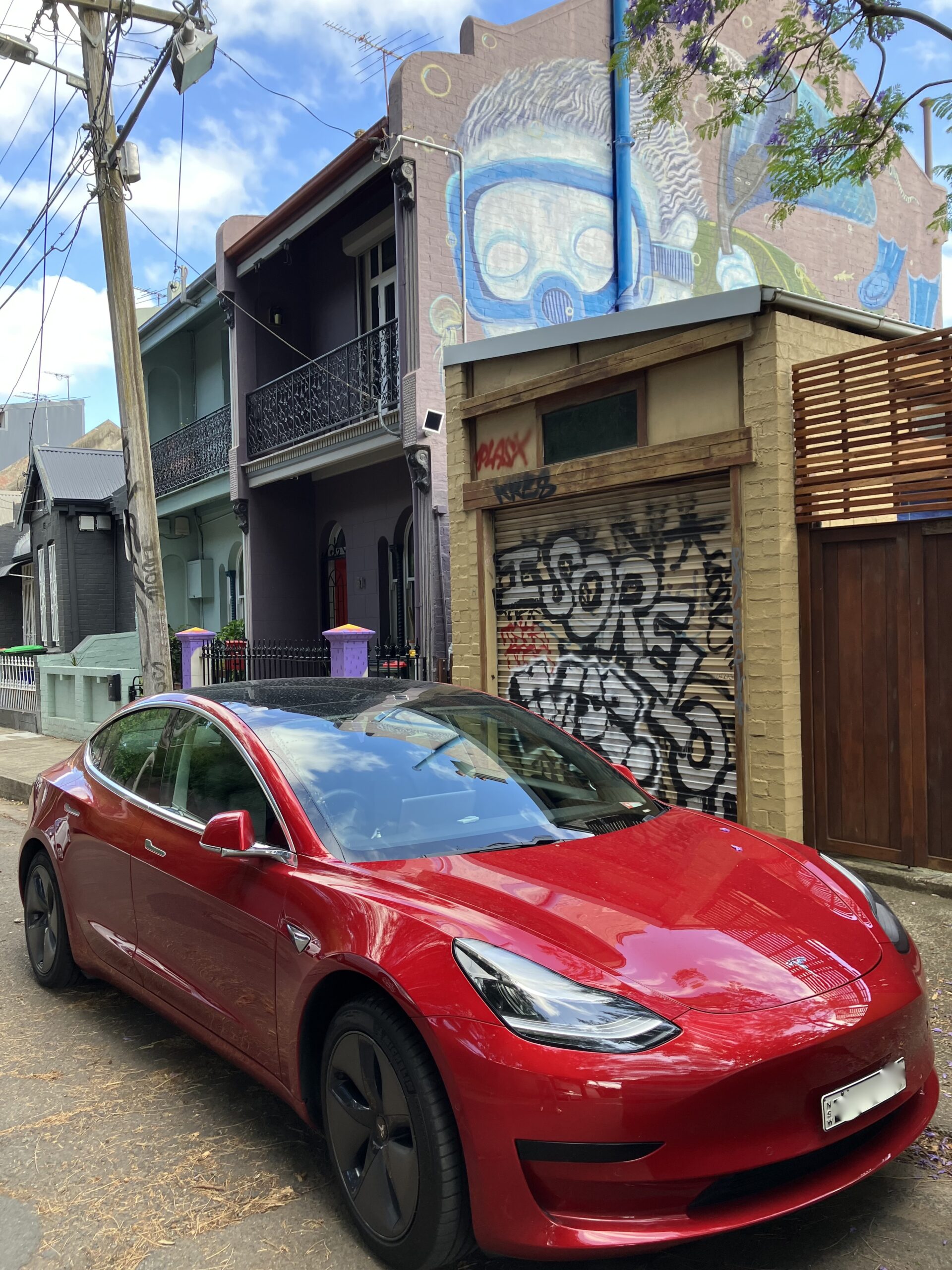
Did you know that swapping your petrol or diesel car (private, work, rental, Uber etc) to an electric vehicle (EV) saves on average 2.7 tonnes of carbon emissions a year per person/household?
It’s the sixth most impactful personal change if you want to be a climate champion. And a great way for organisations and government services to make a high impact change if transitioning a fleet.
The good news is an EV can be very cost effective for you too. Maintenance is very low, no more expensive all day service bookings. Free renewable power is becoming more readily available. And there are more and more EV options to cater for a range of budgets (including a growing second hand market).
Which EV is good for me?
We’ve turned to local enthusiast, Sarah Aubrey, of Electrify This, who is passionate about decarbonising our homes and transport. You can watch her easy-to-digest EV reviews and answers to our common questions here.
Another Australian EV information gem is The Driven. This is very well resourced, and covers more than electric cars (includes trucks, bikes, boats and planes). So if you’re in the market for an electric private jet, read on!
We also recommend Australian independent reviewer Choice for their objective and up-to-date recommendations.
How to charge your electric vehicle
It might seem a bit daunting at first, we are so used to the petrol stations, but we’ve got lots of tips.
Public charging
Some EVs come with clear real-time instructions of where and when to charge your car, making this easy to fit around your day. And there’s always searches online (eg via maps) to quickly find chargers as you go about your day, as you would looking for a petrol station in a new part of the world.
However, we suggest you get to know the PlugShare app also. This platform is updated constantly by users and charge station owners, showing a live map of all charging options in a given location, whether the station is available, out of order, the speed and cost, and amenities nearby. It even includes home chargers available for public usage.
In Australia at the moment, there is a mish-mash of public charging companies and hardware, requiring a frustrating number of app downloads, tap cards, and set ups to start you off. However, other countries have managed this much better and Australia will improve as drivers turn to EVs.
Not all public EV chargers have the cable to connect to your car (these are called “untethered” stations). So to save a panic when you’re getting low on power and are out and about, keep your own Type 2 to Type 2 (T2-T2) cable in the car.
Here’s a down-to-earth deep-dive into public charging if you want more details.
Getting approval to charge on the street using your own power
There are legitimate public access and safety considerations in charging your EV on a public street. Commercial EV chargers have covered these for their installed stations, and you pay for access accordingly.
But what if you want to run a cable from your own property? For some of us it’s definitely doable!
Zero Carbs member, Val, lives in a small 1880s worker’s terrace in Sydney with no off street parking. However, she charges her EV for free on the street any time night or day using her own solar panels and battery (prior to this, using off peak grid power, usually during sunny hours when prices are cheaper -soon to be free- and the grid is bursting with clean solar energy).
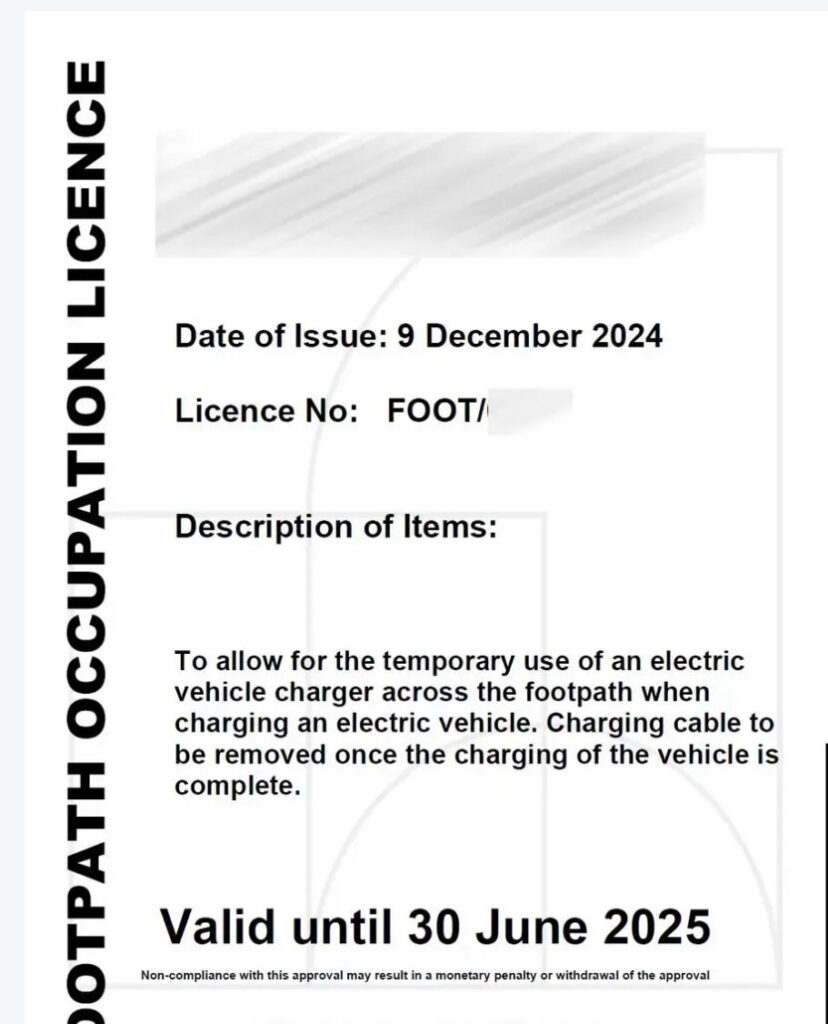
I’d heard through the EV community that I could apply to local council to charge my car from home via a “footpath licence”, the same way a cafe would apply to have seating on a public footpath. It was cost and hassle free, but not advertised.
I had to show council my public indemnity insurance (which I had anyway as part of house and contents), and a photo of my proposed charging set up using a heavy duty removable cable cover (which I bought from the local hardware, and could have returned if it wasn’t suitable). The “footpath licence” has to be displayed so it can be seen from the street. And I have to remove the cable when not in use. Easy!
At first I used a regular extension chord and charged from a standard 15A socket in my fuse box, over night when I was sleeping and the pavement was getting little pedestrian use. But after some years I upgraded to a fast 22kW, 3-phase, EV Charger installed on my front wall. With this, charging is quick, so I tend to give the car one or two short charges a week when I’m at home in sunny hours.
I’m lucky that I have easy access to a spot to park within reach of my charger. I live in an extremely busy part of Sydney. But my residents’ parking permit and a good relationship with neighbours helps. They make sure to keep a spot free for me when possible. There are no parking lines painted on the road which also helps me park in reach.
I know not everyone is as lucky as me to get this access, but many would be who may not know it. And access will only increase as EV uptake increases. I can see we’re reaching a tipping point where combustion engines will be the minority and EV infrastructure will blossom.
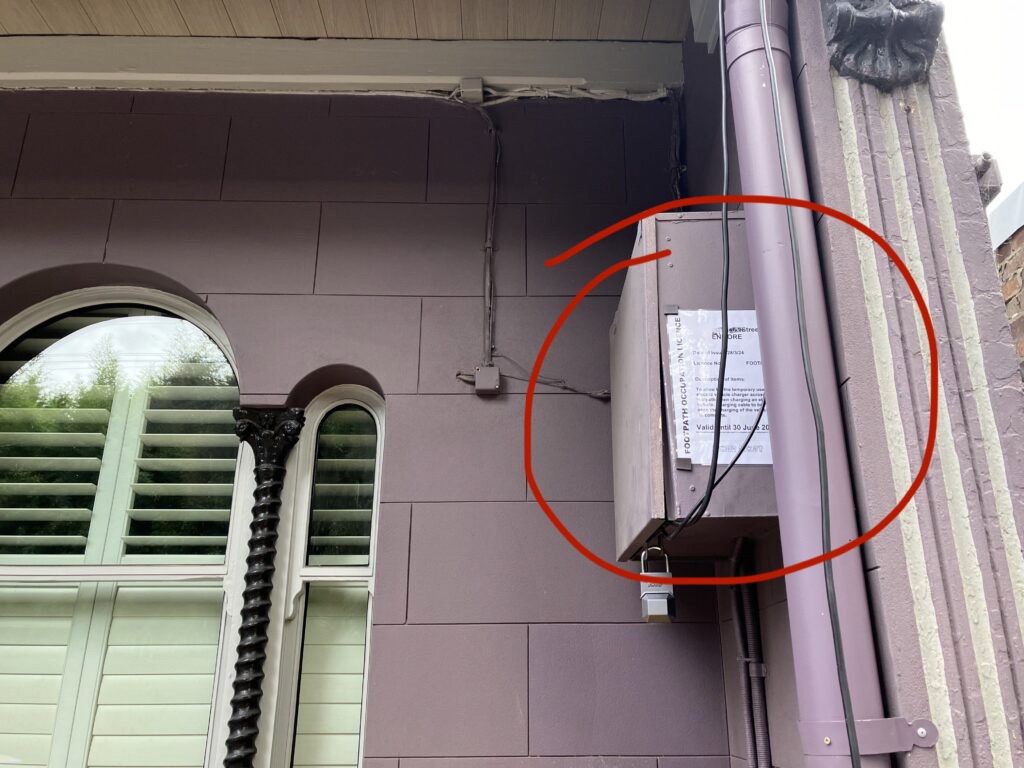
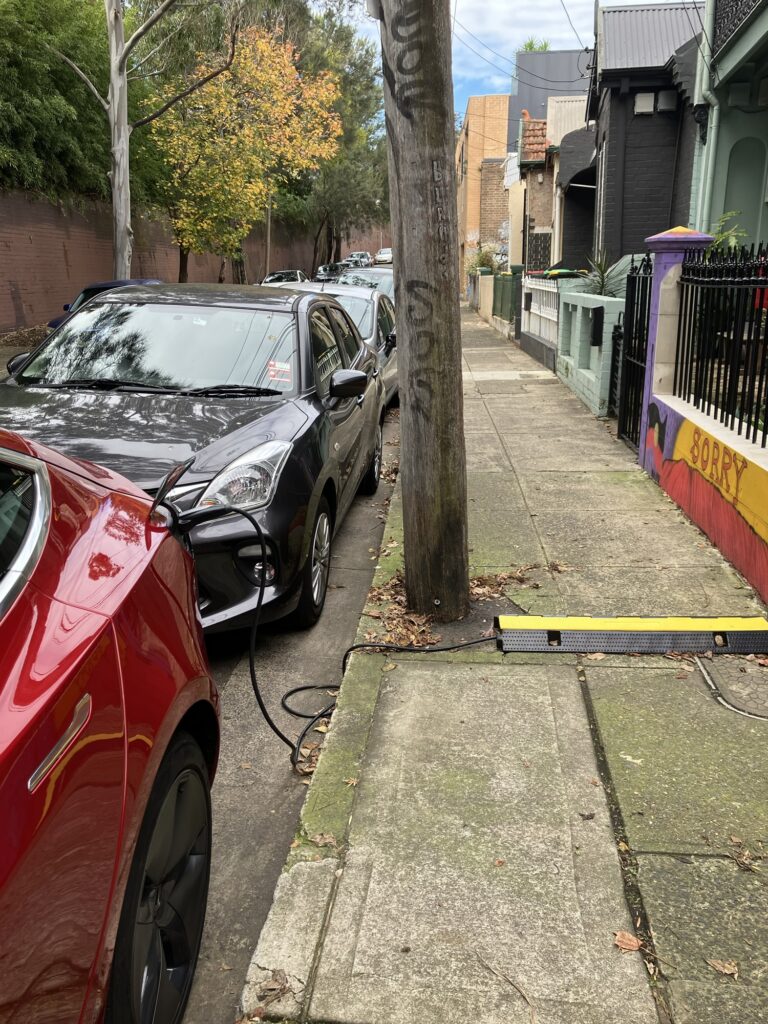
If you are interested in accessing a similar solution to Val’s, you’ll need to get your local council on board to approve charging across public property. Some already have an approval process in place, some might be collecting community interest.
Different councils allow different options including:
- cable gullies / underground chambers (permanently installed, flush with the pavement), example of council requirements here. You can register your interest elsewhere here.
- underground conduits installed by an electrician, example of council requirements here.
- overhead swing arms (attached to your property and swung out into public space whilst used), example here.
- cable covers (very low cost, placed on top of the pavement whilst used), as with Val’s set up above. Good for renters as entirely portable.
- Pop-Up private kerbside chargers, as supported for 100 trial homes so far by this council.
Other private charging options
For a good overview of charging your EV at home (off the street), visit Finn Peacock’s Solar Quotes site.
Case study: Jane is driving on sunshine
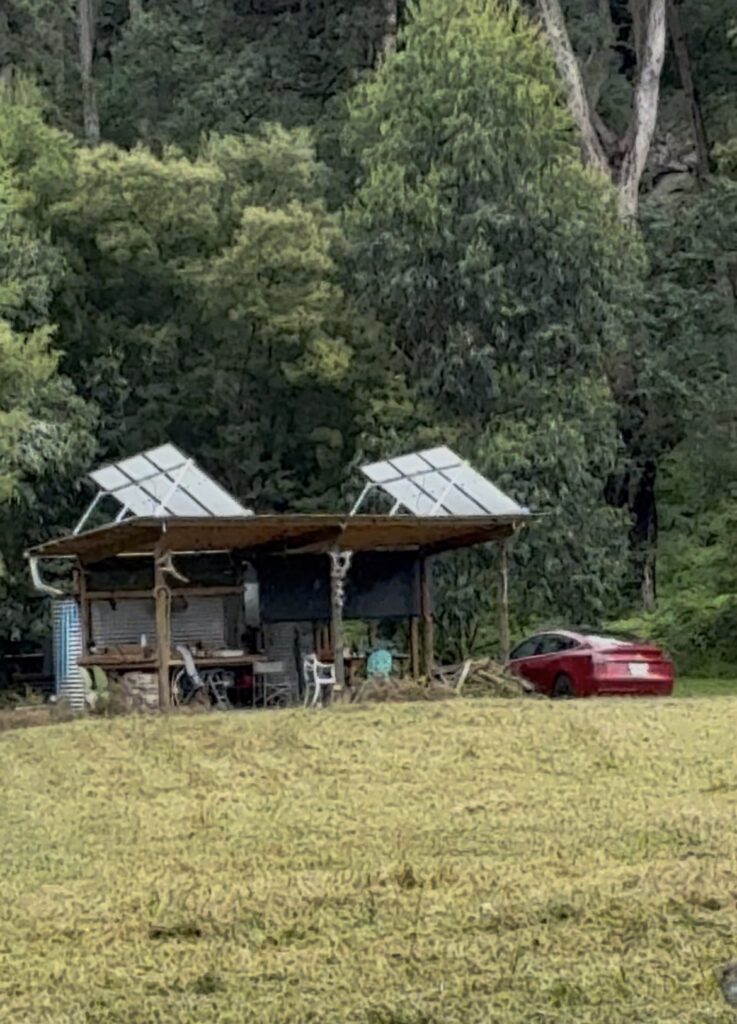
Jane has installed solar panels and batteries on her off-grid bush property. She and her friends charge their EVs there in sunny hours whilst regenerating the old dairy farm into native bush land.
At her home in the city, she has widened access to her front door so that she can park her small EV off-street. She charges it from a simple extension chord through the window. She’s installed solar panels and batteries at this property too.
She can drive between her two properties emissions and cost free. Although there was a significant cost to set up the infrastructure, it will pay itself off. Quicker than expected as of 2026 as the cost of living rises and the Middle East petroleum crisis has taken effect.